
Author: Donrich Thaldar
Which AI models actually know South African law?

In my latest article, I put five of the most popular AI tools through a South African legal obstacle course to see how they perform in reasoning through real legal scenarios. The idea was simple: can generative AI — not trained specifically on South African law — reason like a local lawyer?
The results were illuminating. Some models impressed. Others, well, should probably be held in contempt of court.
The study covered three scenarios drawn from private law:
1. What happens when a dachshund bites someone?
2. Do you have to pay if you refuse to take your bakkie back after it’s been serviced?
3. Who’s liable when a veldfire gets out of control?
This post focuses on that third scenario. If you’d like to see how they handled the sausage dog and the car dispute, you’ll find all the details (and comparative scores) in the full article here.
Setting the scene: fire in the Midlands
Imagine Jacob, a cattle farmer in the KZN Midlands, decides to burn dry grass on his farm to clear it for new growth. His neighbour Maria has warned him, repeatedly, about the risk — the wind tends to carry embers across the fence. Jacob proceeds anyway. Predictably, the fire jumps the fence, damages Maria’s grazing land, and injures two of her prized Nguni cattle.
Maria demands compensation. Jacob says it was an accident.
Now, this is no hypothetical exam question — it’s a legal minefield, blending common law delict and the National Veld and Forest Fire Act 101 of 1998 (NVFFA).
What the law requires (and what AI needs to spot)
At common law, this is a textbook case of actio legis Aquiliae — delictual liability for patrimonial loss. The plaintiff must show five elements: conduct, wrongfulness, fault, causation, and damage.
But the NVFFA raises the stakes. Under section 34(1), there’s a statutory presumption of negligence if a veldfire spreads from one property and causes harm. This flips the burden: unless Jacob can show he took reasonable precautions, he is presumed negligent. That statutory overlay is not optional — it defines how a South African court would approach the matter.
In this scenario, I was especially interested to see which AI models could:
- Identify actio legis Aquiliae as the correct cause of action,
- Recognise the relevance of the NVFFA,
- Incorporate the statutory presumption into their analysis,
- And apply it coherently to the facts.
Spoiler: only one of them did all of this.
Claude — the star pupil
Claude not only identified the actio legis Aquiliae correctly, but it also engaged with the NVFFA in a legally accurate way. It recognised the statutory presumption of negligence, discussed section 12(1) (the duty to maintain firebreaks), and even flagged whether Jacob belonged to a fire protection association.
Claude’s analysis wasn’t just correct — it was legally structured, cited real case law, and anticipated counterarguments. This is the only model I would even consider letting draft a first-year exam answer — let alone a client memo.
ChatGPT — clever, but forgot about statute law
ChatGPT correctly identified the delictual claim and applied the five elements sensibly, even citing Kruger v Coetzeeappropriately for the test of negligence. But it missed the NVFFA entirely. That omission significantly weakens the analysis, as it ignores the shift in evidentiary burden and the statutory duty of care.
Still, its output was coherent, reasonably structured, and persuasive — provided you don’t ask it to deal with statutes unless you explicitly prompt it.
DeepSeek — close, but misses the mark
DeepSeek followed a similar pattern to ChatGPT: good grasp of delictual structure, but no engagement with the statute. It also relied on real case law, though its application of legal principles was occasionally vague. Competent, but not reliable if the issue involves anything beyond textbook delict.
Grok and Gemini — not ready for the bar
Both Grok and Gemini performed poorly. Grok referred to a “delict of negligence” — a fundamental misunderstanding of how South African law frames fault. Neither model identified actio legis Aquiliae. Neither mentioned the NVFFA. Case law citations were weak or missing. These models felt like overseas exchange students bluffing their way through a South African law tutorial. Politely put: not helpful.
What this tells us about AI in legal research
The veldfire scenario offers a revealing stress test for generative AI. It shows that while large models can replicate form, their depth of legal reasoning varies wildly — especially when statutory law modifies common-law doctrine.
A few takeaways:
- Don’t assume AI knows the law. Sometimes it does, sometimes it does not. And sometimes it is only partial.
- Citation ≠ comprehension. Some models cite real cases but don’t understand them; others hallucinate entirely.
- Structured reasoning is rare. Only one of the five models showed a true grasp of how common law, statute, and fact must interact in legal analysis.
Want more?
The full article contains all three scenarios, a comparative table of how the five models performed across seven legal criteria, and more detailed observations about hallucinated case law, doctrinal confusion, and where AI shows promise (and where it absolutely doesn’t).
Authenticity in the age of genetic engineering: lessons from a dachshund

Once upon a time, wolves roamed the wild—majestic, cunning, and fierce. Fast forward a few millennia, and my dachshund, Zazu, naps in a sunbeam, snorts at his food bowl when dinner is two minutes late, and experiences existential dread when the neighbour’s cat walks by. His legs are too short to run fast, his bark too comical to intimidate, and his idea of hunting involves dragging his plush toy into the laundry basket. And yet—is he less authentic than his wolf ancestors?
This isn’t just a quirky thought about a pampered pet. It’s a window into a serious philosophical question: does genetic engineering threaten authenticity?
Critics of genetic engineering often say yes. Their argument is that if children’s genomes have been engineered—if their traits were chosen—then they somehow are not really themselves. That genetic intervention imposes a kind of inauthenticity. But this assumes that authenticity flows from genetic purity, from being the way evolution left us. Which brings us back to Zazu.
Zazu is not “natural.” He is the product of generations of deliberate human selection. Yet he is not haunted by the ghost of lupine dignity. He does not need to chase elk across the tundra to be real. He lives his life—ears flapping, legs flying, heart full. And therein lies the point: authenticity is not about where you come from. It’s about how you live.
In my recent article, “Existentialism and My ‘Postwolf’ Dachshund: Authenticity in the Age of Genetic Engineering” (Bioethics, 2025), I argue that we should understand authenticity through an existentialist lens, not an essentialist one. Existentialist philosophers like Heidegger and Sartre teach us that we are not defined by our origins, but by how we engage with the conditions of our existence. We are thrown into life—into a body, a time, a genome—and from there, we must choose. We must live.
From this view, genetic engineering does not inherently undermine authenticity. A genetically engineered trait is just one more part of the thrownness we must navigate. What matters is not whether a trait was chosen, but whether the individual can engage with it meaningfully, shape their life freely, and take ownership of who they become.
Of course, this doesn’t mean that all genetic engineering is ethically unproblematic. It means we need to evaluate interventions based on whether they support or undermine the individual’s future autonomy and capacity for authentic living. In my article, I propose combining two guiding principles: Procreative Beneficence (choose traits that enhance flourishing) and Procreative Non-Maleficence (don’t impose harmful constraints). These principles together offer a framework for ethical genetic decision-making—neither blindly optimistic nor paralyzed by purity anxiety.
What existentialism reminds us is that there is no “true essence” to be protected in a pristine genome. The idea of a fixed human nature—like the idea of Zazu needing to recover his “authentic wolfness”—is philosophically brittle. We are not wolves, and that’s okay. Nor are we prisoners of our DNA. We are free beings, capable of shaping meaning from the givens of our lives—whether those givens arrived through nature, nurture, or a CRISPR edit.
If you’re interested in the full argument—including responses to Habermas and Fukuyama, a reconstruction of authenticity through Heidegger and Sartre, and the introduction of a dachshund named Zazu as an unlikely philosophical provocateur—you can read the article here:
🔗 https://doi.org/10.1111/bioe.13428

Can ChatGPT-4 draft complex legal contracts? I put it to the test
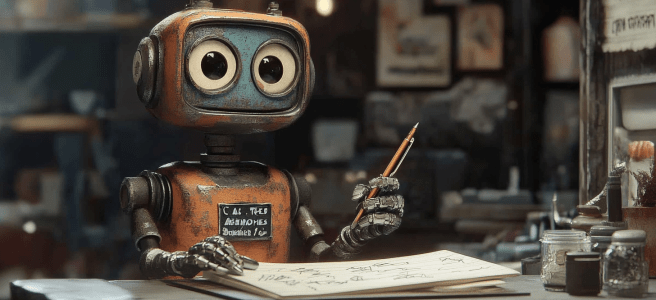
The legal profession is changing—and not slowly. With generative AI models like ChatGPT-4 becoming increasingly capable, it’s no longer a matter of if they’ll assist legal professionals, but how. So I decided to put ChatGPT-4 through its paces with one of the more demanding legal documents in my field: the Data Transfer Agreement (DTA) for health research.
DTAs are not your everyday consumer contracts. They deal with sensitive personal data, cross-border data flows, and legal compliance in an increasingly regulated landscape. They are intricate, specialist documents, and they’re rarely found in the public domain—meaning they likely weren’t heavily represented in the data ChatGPT-4 was trained on. In short, if generative AI can draft a decent DTA, that would be something worth paying attention to.
So I ran an experiment. First, I used ChatGPT-4 to generate an outline of a typical DTA. Then, I fed it each clause heading and asked for a detailed version of each clause. The result? A 6,800-word draft DTA—coherent, reasonably structured, and almost impressive.
But not perfect.
In my article just published in Humanities and Social Sciences Communications, I dig into where ChatGPT-4 excels and where it still falls short. Yes, it can generate most of the expected clauses. But its grasp of legal precision, clarity, and especially data protection compliance still leaves room for improvement. There are issues with redundancy, inconsistent use of terms, and ambiguous concepts like “derivative works.” And although it mentions security and compliance, it doesn’t always go deep enough to meet best-practice standards.
The takeaway? ChatGPT-4 is not ready to replace lawyers. But it is already a powerful tool in the legal drafting toolbox—especially when used strategically. My two-stage approach (first outlining, then refining clause-by-clause) is a method I believe many legal professionals can adopt to streamline their work while maintaining full control and accountability.
Most importantly, this experiment raised a set of broader questions—ethical ones. Should clients be told when AI was involved in drafting? Who is ultimately responsible for errors? And how do we ensure fairness in a world where algorithmic bias can quietly shape outcomes?
The answers aren’t simple. But one thing is clear: the future of legal drafting will be a collaboration between human lawyers and artificial intelligence. This study is a small, practical step in figuring out what that collaboration should look like.
If you’re curious to see what ChatGPT-4 produced—or if you’re a legal professional wondering how to make the most of AI without compromising on quality—you’ll find the full article here:
Reclaiming reproductive autonomy in surrogacy law

On Monday, 24 March 2025, I was a panellist at the Third International Surrogacy Forum, held in Cape Town. Here is my speech:
Good morning, esteemed colleagues, scholars, and guests,
It is an honour to address you today as a litigator immersed in surrogacy—a field where law, ethics, and human rights intersect, often uneasily. Building on the insightful foundation laid by my co-presenter, I want to highlight a growing concern: the steady erosion of reproductive autonomy—disguised as protection—that has unfolded in the fifteen years since our current surrogacy framework was enacted.
My co-presenter has already outlined the statutory framework, so I’ll revisit it only briefly. As you know, the Children’s Act imposes stringent requirements: all parties must be domiciled in South Africa; the commissioning parents must be unable to carry a pregnancy; the arrangement must be altruistic—no compensation beyond expenses; and commissioning parents must use their own gametes. These conditions are unusually rigid when compared to other reproductive options. Yet, these legislative requirements are merely the starting point. What has emerged from judicial practice since then is a far more elaborate and exclusionary system.
Over the past decade, the courts have built substantially on the Act’s foundation—sometimes, I would argue, too substantially. Let me be clear: I have deep respect for our judiciary, including my colleague here from the Western Cape High Court. Judges tasked with deciding these cases strive for fairness and compassion. My concern is not with their intentions, but with the cumulative effect of these judicial expansions. They have created what I would call hyper-regulation—a regime so procedural, so demanding, that it places surrogacy far beyond the reach of many.
Consider the current practice: exhaustive psychological assessments that require parties to recount their entire life histories, layered with psychometric tests that seem barely connected to parenting capacity. Detailed financial disclosures that demand transparency beyond what most people could tolerate. And in the Western Cape, a mandatory detour through the Office of the Family Advocate. None of these steps are required by the Children’s Act. They were introduced by the courts, in the name of protection. Viewed individually, each requirement may appear reasonable—even prudent. But taken together, they form a mountain of procedural and financial hurdles. The process is not just burdensome; it is exclusionary.
Why does this matter—really matter? Because at its core, surrogacy is about reproductive autonomy, a right intimately tied to dignity, freedom, and equality under our Constitution. Yet both the legislature and the judiciary have embraced the view that it is justifiable—perhaps even necessary—to wrap this right in red tape. For individuals who must turn to surrogacy to build a family, these restrictions don’t merely complicate the process; they marginalise them. They send a message: your reproductive choices are suspect, your decisions require greater oversight than those of fertile couples conceiving naturally. In an open, democratic society, that message should trouble us all.
Of course, surrogacy is not natural reproduction. The involvement of a third party—the surrogate—introduces legitimate concerns about exploitation. A legal framework that brings structure, certainty, and protection is warranted. But South Africa’s approach does more than that. It elevates the best interests of the child—a child who does not yet exist—as the ultimate measure of legality. Unlike any other form of reproduction, surrogacy gives judges the power to override the autonomous decisions of consenting adults based on speculative assessments of a hypothetical child’s future.
And if we are comfortable applying that standard here, why stop with surrogacy? Why not apply the same test to natural conception? Why not require psychological evaluations, financial stability checks, or even court approval before anyone is allowed to have a baby the old-fashioned way? The answer is simple: we don’t—and we wouldn’t dare. So why is it acceptable to subject a small, vulnerable group of people—infertile individuals—to this level of scrutiny and control?
Let me pause to acknowledge the obvious question: am I suggesting that the best interests of the future child don’t matter? Of course not. They do. But they cannot be the decisive factor in determining access to surrogacy when no such test exists for others. This is not a minor legal inconsistency—it is a profound issue of equality. We are singling out a minority and holding them to a standard we would never apply universally. And let’s be honest: it’s easier to do that when the group in question is small, marginalised, and lacks political power.
The result? A process so complex, so costly, and so protracted that it is inaccessible to most. Who is actually able to pursue surrogacy under this regime? Spoiler alert: it’s not the average South African. To navigate this system, you need time, money, and legal sophistication. The framework has become a gatekeeping mechanism that excludes the very people it was meant to support.
Yes, we must protect all parties involved—surrogates from exploitation, commissioning parents from disappointment, and children from harm. But our current system fails to strike a balance between protection and accessibility. It sacrifices the latter at the altar of the former. And that is a constitutional failure. Because access to reproductive healthcare—including surrogacy—is not supposed to be a privilege reserved for the wealthy. It is a right.
So, where do we go from here? South Africa’s surrogacy laws have shifted from cautious over-regulation to full-blown hyper-regulation. It’s time for serious reform—not just tweaks around the edges, but a substantial overhaul. We need to simplify the process. We need to cut the procedural fat. We need to lower the financial and administrative barriers that currently lock so many people out.
Can we protect all parties while also making surrogacy genuinely accessible? I believe we can—and we must. Because if we don’t, we are not just failing infertile individuals or willing surrogates. We are failing the constitutional promise of dignity, freedom, and equality.
Let me leave you with a question: If we’re willing to recalibrate rights based on the interests of a child who doesn’t yet exist, how do we justify doing it only in the context of surrogacy? And if we can’t answer that without tying ourselves in knots, then perhaps it’s time to admit we’ve got the balance wrong—and start fixing it.
 Donrich Thaldar